Curling
Curling is a turn-based ice sport built around one simple goal: finish an end with your stones closer to the button than your opponent's closest stone.
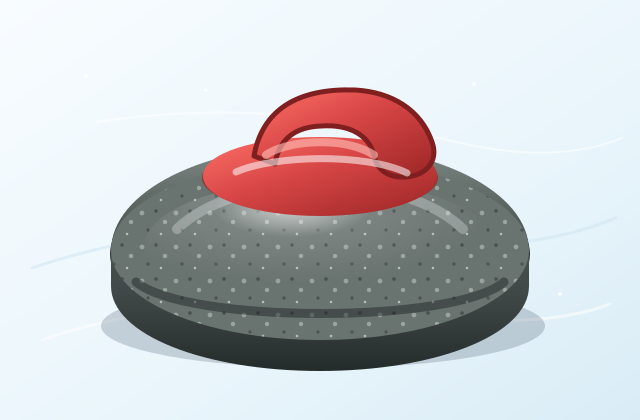
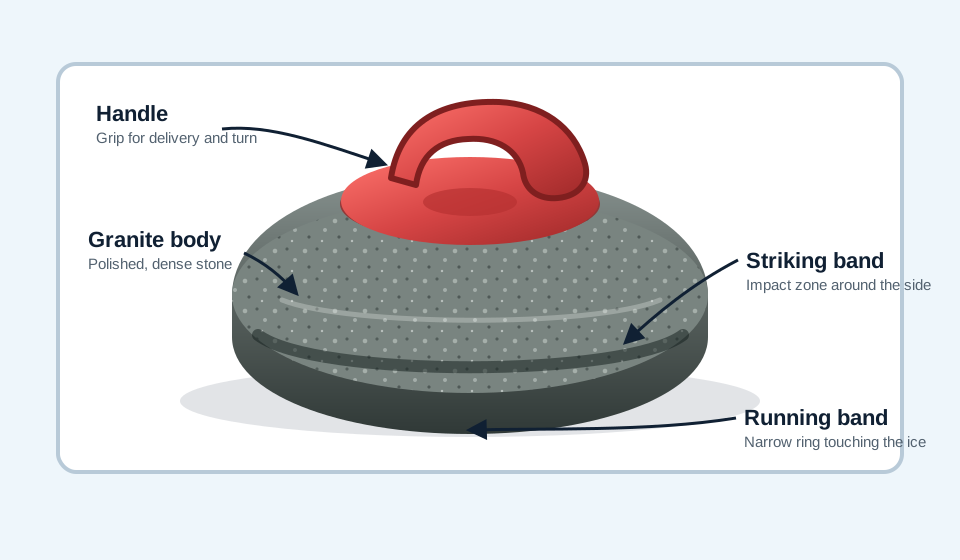
Each team slides polished granite stones down a sheet of ice toward a target called the house. Teammates sweep in front of the moving stone to influence how far it travels and how much it curls. The game looks gentle from a distance, but every shot asks for a mix of touch, geometry, timing, and risk management.
The Sheet
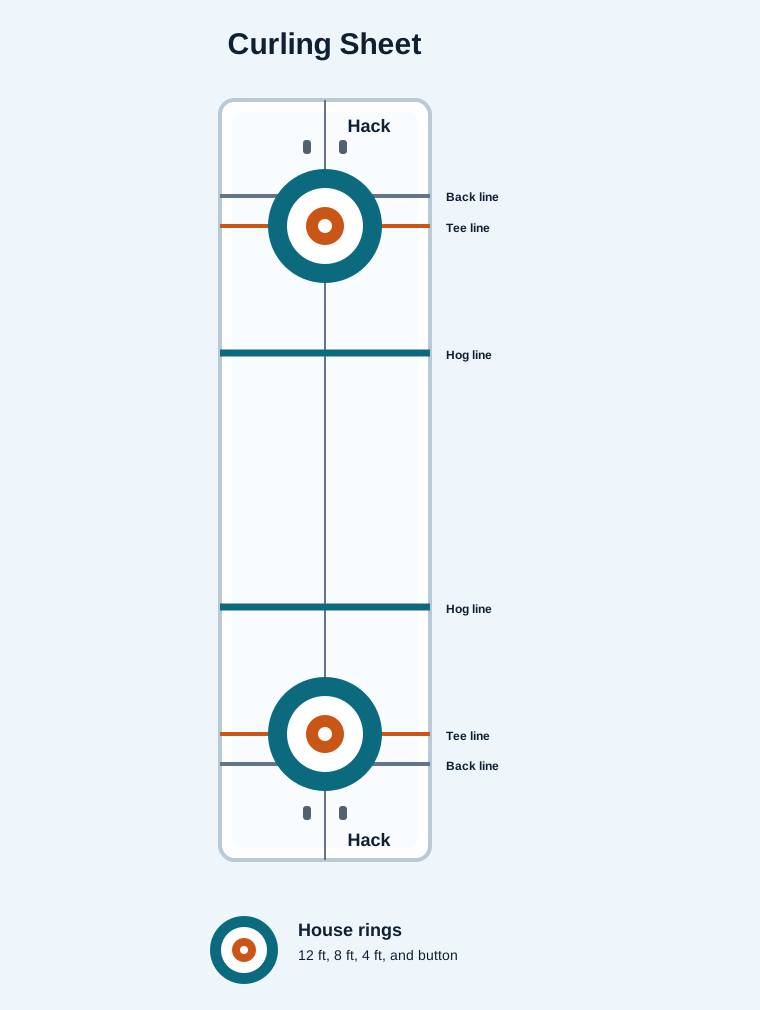
The playing surface is a long sheet of pebbled ice. The circular target at each end is the house, and the small circle in the middle is the button.
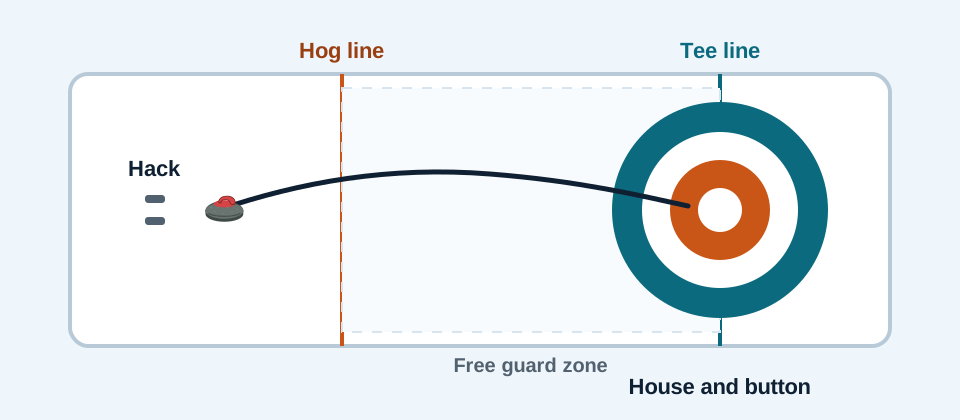
Important landmarks:
- The Hack: Where the thrower pushes off.
- The Hog Line: The line a delivered stone must cross to stay in play.
- The Tee Line: Runs right through the center of the button.
- The Free Guard Zone: The area in front of the house where early guards are protected by opening rules.
How An End Works
An end is like an inning in baseball. Teams alternate shots until all stones have been thrown. In standard four-player curling, each team throws eight stones per end. In Hog To Hog scenarios, we often drop you into one important shot so you can practice the decision without playing a whole end first.
The team with the last rock in an end has the hammer. Hammer is valuable because the final shot can score, blank the end, or clean up danger.
Scoring
Only one team scores in an end. After all stones stop, the team with the stone closest to the button scores one point for each of its stones that is closer than the opponent's nearest stone.
Pro Tip: If your team has the closest stone and the third-closest stone, but your opponent has the second-closest stone, you score exactly one point. Your second counting stone must beat every opposing stone to score.
Throwing A Stone
A curling shot has three main ingredients:
- Line: The path you aim along.
- Weight: The speed needed for the stone to stop in the right area.
- Turn: The clockwise or counterclockwise rotation that makes the stone curl.
- Draws are touch shots that stop in play.
- Hits are firmer shots that remove or move stones.
- Guards stop in front of the house to protect scoring stones or make future shots harder.
Why Stones Curl
Curling stones do not travel in a perfectly straight line. A delivered stone rotates slowly while sliding over the pebbled ice. As the stone loses speed, the interaction between rotation, friction, and the ice surface makes the path bend.
The last part of the shot often curls the most because the stone is moving slowly enough for sideways motion to take over. That is why a shot that looks perfect halfway down the sheet can still over-curl or hang wide near the house.
The Art of Sweeping
Sweeping is one of the most dynamic aspects of curling. Sweeping vigorously changes the ice in front of the stone in real-time. The friction from the broom head slightly warms the ice, modifying how the stone behaves.
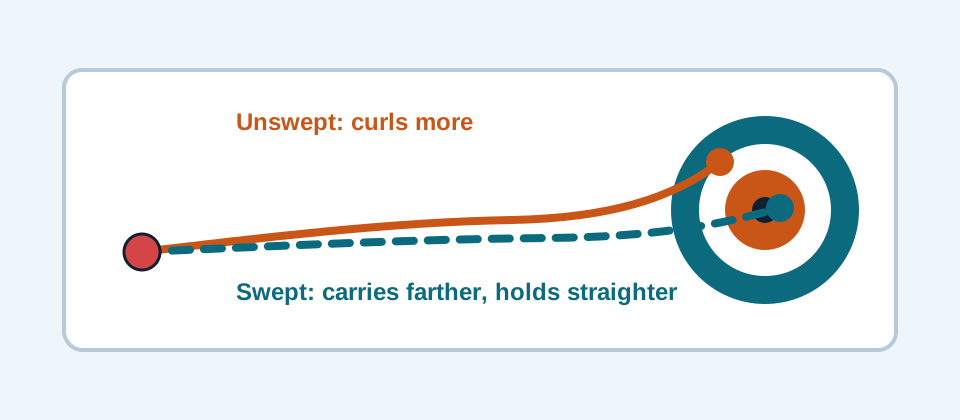
Modern curling employs directional sweeping to fine-tune the stone's trajectory. Depending on the angle and pressure of the broom, sweepers can achieve two distinct effects:
- "Straight" Sweeping: The goal here is to reduce friction evenly across the stone's path. This causes the stone to travel farther and curl less, effectively keeping its line straighter for longer.
- "Curl" Sweeping: By applying concentrated pressure and sweeping at a specific angle (often using a single sweeper), players intentionally create micro-grooves in the ice. These grooves "steer" the rock, forcing it to grab the ice and curl more than it naturally would, or delaying the curl until the perfect moment.
When to Sweep
- Sweep for distance: When a rock is light and needs to travel farther to reach the house.
- Sweep for line (straight): When a rock is starting to curl too early and risks hitting a guard or sliding out of the intended path.
- Sweep for curl: When a rock is staying too straight and needs extra help bending around a guard or biting the button near the end of its journey.
Small sweeping choices late in the shot can change whether a draw touches the four-foot, perfectly guards a stone, or slides past the scoring area entirely.
Strategy With Hammer
With hammer, your usual goal is to score two or more. A single point can be acceptable, but it often gives the hammer back to the other team in the next end.
Common hammer ideas:
- Keep the middle open if you want a simple path to score.
- Use corner guards to build a chance at two.
- Blank the end if scoring one would be worse than keeping hammer.
- Avoid leaving your opponent an easy steal.
Strategy Without Hammer
Without hammer, your first goal is often to force the other team to score only one. A steal is even better, but chasing a steal too hard can give up a big end.
Common no-hammer ideas:
- Put guards in useful places (often the center).
- Make the hammer team's final shot difficult.
- Sit shot stone when the chance is there.
- Trade stones (hit) when the other team is building too much danger.
Curling Game Modes
Once the basic shot-making and scoring ideas make sense, different curling formats change the pressure points:
- Mixed doubles curling uses two-player teams, five delivered stones per team, positioned stones before each end, and one power play per team.
- Sturling curling is a two-player format with six-stone ends and strict sweeping limits.
- Skins curling turns each end into a prize, with carryovers that can make one end worth much more than the scoreboard alone suggests.
Try A Shot
This beginner scenario makes the scoring ideas above concrete:
Play For Free
When you are ready to play full games, create a free Hog To Hog account. An account lets you save progress, play matches, join clubs, challenge other players, and build custom scenarios.